Termites can damage wooden furniture, door frames, cabinets and other cellulose-containing materials, sometimes before homeowners notice visible activity. If your house or apartment is already constructed, you may wonder whether termite protection is still possible without major renovation.
The answer is yes. Post-construction termite treatment can be carried out in existing properties, although the appropriate method depends on the termite species, building structure, infestation and access conditions.
For homeowners considering post-construction termite treatment in Thane, understanding the available methods can help you make an informed decision.
What Is Post-Construction Termite Treatment?
Post-construction termite treatment refers to termite management carried out after a building has been completed.
Unlike pre-construction treatment, where protective measures can be incorporated during building work, post-construction treatment must account for existing flooring, walls, plumbing, furniture and occupied rooms.
Depending on the inspection findings, a pest management professional may recommend:
- Targeted treatment of active termite locations
- Soil treatment around suitable structural areas
- Drilling and injection where technically appropriate
- Termite baiting systems
- Treatment of affected wood
- Moisture reduction and structural repairs
Not every property needs every method. Treatment should be selected according to the infestation and construction conditions.
Why Can Termites Affect Completed Buildings in Thane?
Subterranean termites live in colonies and may reach buildings through soil, concealed cracks, foundation openings and other accessible routes.
Wood-to-soil contact, moisture problems and untreated entry points can increase vulnerability.
Properties in Thane, including apartments, independent houses and commercial premises, may have different termite risks depending on their construction and maintenance.
Termites can also affect furniture or other wooden materials independently of a building's foundation. Correct identification is essential because different termite types may require different control methods.
Warning Signs That Require Inspection
Look for the following possible indicators:
Mud Tubes
Subterranean termites sometimes build narrow, soil-like tubes along walls, foundations or concealed surfaces.
Hollow or Damaged Wood
Wood may sound hollow when tapped or show internal damage beneath an apparently intact surface.
Damaged Door Frames and Cabinets
Unexplained deterioration around wooden fixtures can justify closer investigation.
Discarded Wings
Winged termite swarmers may shed their wings near windows, doors or lights.
However, winged ants can look similar, so identification should not rely on wings alone.
Recurring Activity
Fresh mud tubes or continued damage after earlier treatment may indicate that further investigation is needed.
These signs are not definitive proof of a particular termite species. A professional inspection helps establish the cause.
How Does Post-Construction Termite Treatment Work?
1. Property Inspection
The process begins by examining affected wood, accessible structural areas, moisture sources and potential termite entry routes.
A technician may inspect skirting boards, door frames, kitchen cabinets, plumbing penetrations and accessible foundation areas.
2. Termite Identification
Identifying whether the problem involves subterranean termites, drywood termites or another wood-damaging pest is important.
Treatment methods differ, and not every wood-damage problem is caused by termites.
3. Selecting the Treatment Method
The provider should explain the recommended method, the areas requiring access, expected limitations and follow-up requirements.
A written treatment plan is particularly useful for larger properties and housing societies.
Method 1: Drilling and Injection Treatment
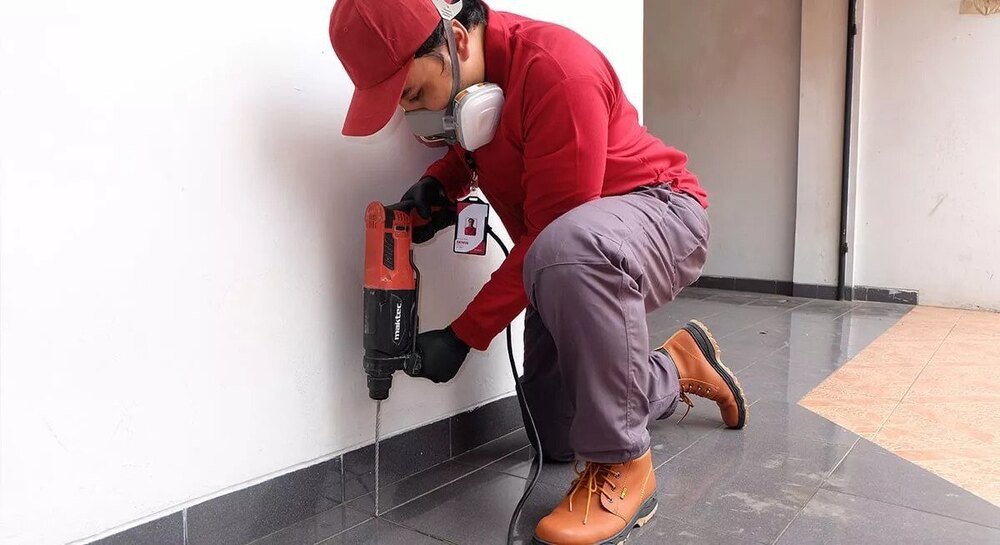
For certain existing buildings affected by subterranean termites, professionals may drill carefully planned access holes and apply an approved termiticide into suitable soil or structural treatment zones.
The purpose is to address termite movement through relevant entry areas or establish a treated zone where the method is appropriate.
Important considerations include:
- Existing flooring and structural layout
- Concealed electrical and plumbing services
- Soil accessibility
- Product suitability and label directions
- Potential drilling damage and repairs
Drilling should never be performed blindly. It requires technical assessment and appropriate safety precautions.
Method 2: Soil-Based Termite Treatment
Some subterranean termite management programmes use registered soil-applied termiticides around accessible foundations or other suitable locations.
The objective is to reduce termite access through treated soil.
However, treatment continuity may be difficult in completed buildings with complex foundations, inaccessible areas or adjoining structures.
A professional should explain where treatment can and cannot be applied.
Method 3: Termite Baiting Systems
Termite baiting involves installing suitable monitoring or bait stations in locations where termite activity can be detected or intercepted.
When an appropriate bait system is used and termites feed on it, the treatment may affect colony activity over time.
Baiting requires monitoring and maintenance. Results are not immediate, and performance depends on termite behaviour, placement and the selected system.
Method 4: Localised Wood Treatment
Where an infestation is limited to accessible wooden materials, targeted wood treatment may be considered.
Options depend on the pest species, degree of damage and whether the affected material can be safely treated.
Severely damaged structural wood may require assessment and repair by a qualified building professional.
Surface spraying alone should not be assumed to eliminate concealed termite colonies.
How Much Does Post-Construction Termite Treatment Cost in Thane?
There is no single reliable price for every property.
A quotation may depend on:
- Total treatment area
- Building type and floor layout
- Termite species and infestation severity
- Selected treatment method
- Drilling and access requirements
- Number of affected rooms or structural zones
- Monitoring and follow-up arrangements
Ask for an inspection-based quotation that specifies the treatment scope, products or methods, safety instructions and any exclusions.
Avoid choosing a service solely because it offers the lowest initial price.
Preparing Your Home for Termite Treatment
Preparation requirements depend on the chosen method.
Before treatment:
- Identify the rooms where activity has been observed.
- Photograph visible termite signs.
- Provide access to affected cabinets and wooden fixtures.
- Inform the technician about concealed pipes or electrical wiring.
- Keep children and pets away from treatment areas as instructed.
- Ask whether furniture or stored items need to be moved.
Do not disturb suspected termite activity unnecessarily before inspection, as this may make the infestation harder to assess.
How to Reduce Future Termite Risks
Treatment works best alongside practical building maintenance.
Useful preventive measures include:
- Repairing leaking pipes and drainage problems
- Reducing persistent moisture near wooden structures
- Avoiding direct wood-to-soil contact where possible
- Removing unnecessary timber and cardboard from damp storage areas
- Checking wooden fixtures periodically
- Arranging follow-up inspections when recommended
No treatment can guarantee permanent termite exclusion under every future condition.
Termite Management for Thane Housing Societies
Multi-unit buildings may have shared foundations, service areas and concealed structural routes.
If termite activity appears in several flats or common spaces, the society should consider a coordinated inspection rather than treating each affected room independently.
Building management can maintain records of reported activity, previous treatments, moisture repairs and follow-up findings.
This helps identify recurring problems and supports more consistent maintenance decisions.
Frequently Asked Questions
Can termite treatment be done after construction?
Yes. Existing buildings can receive post-construction termite management, but the appropriate method depends on the property and termite infestation.
Is drilling always necessary?
No. Drilling may be suitable for some soil-treatment approaches, but baiting, targeted wood treatment or other methods may be appropriate in different circumstances.
Will termite treatment damage my flooring?
Some methods involve drilling or access work. Ask the provider to explain the proposed locations, precautions and repair arrangements before treatment.
How long does termite treatment take?
Treatment duration varies with property size, access conditions and the chosen method. Baiting and monitoring programmes may require ongoing visits.
Can termites return after treatment?
Yes. New termite activity can occur if colonies survive, treatment coverage is incomplete or termites gain access through untreated routes. Monitoring and maintenance remain important.
Looking for Post-Construction Termite Treatment in Thane?
If you have noticed mud tubes, damaged wooden fixtures or suspected termite activity in an existing property, a proper inspection is the first step.
Supreme Pest Control provides pest management services in Mumbai, Thane, Navi Mumbai and Pune.
Visit https://supremepestcontrol.co.in/ to enquire about termite management for your home, apartment or commercial property.
Understanding the infestation, choosing a suitable treatment and maintaining the property can help reduce the risk of further termite damage.
Need help with a pest issue?
Our team can discuss an inspection for your property in Mumbai, Thane, Navi Mumbai or Pune.
Book an inspection ↗